Community · 4 min read
The unwritten rules of open play
Paddle queues, rotations and the delicate art of the friendly challenge — open play is pickleball's social engine.
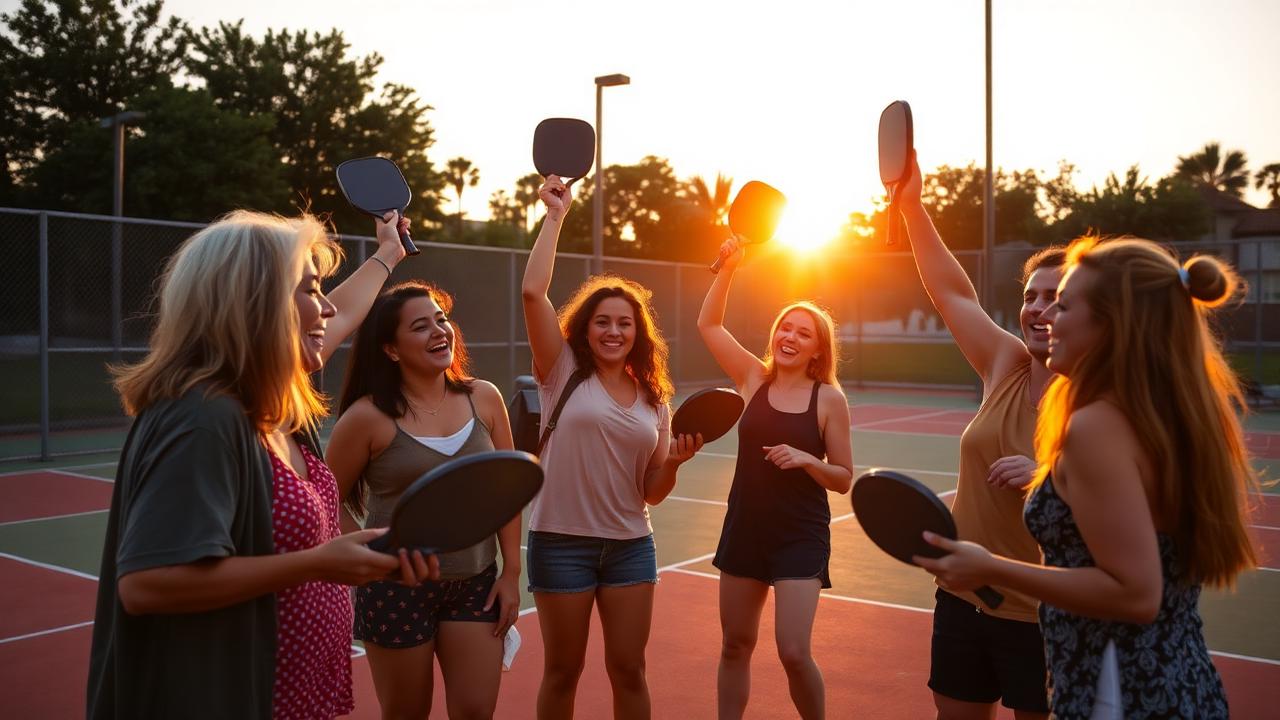
No governing body wrote the rules of open play. They emerged from thousands of parks solving the same problem: more people than courts, and everyone wants a game.
The mechanics vary by city — paddle stacks, whiteboard queues, winner-stays with a two-game cap — but the etiquette underneath is universal. Announce your score. Call your own faults honestly. Thank the court when you rotate off.
The subtle skill is calibration. Open play mixes 2.5 beginners with 4.5 tournament players, and the social contract asks the stronger player to make the game good, not just win it. A well-hit dink to a beginner's forehand is a form of hospitality.
This is pickleball's real competitive moat as a product: the sport ships with a community protocol built in. Apps can organize it, but they didn't invent it.
Keep reading
More from Culture
History · 6 min read
From a Bainbridge driveway to sold-out arenas
Three dads, a bored summer and a perforated ball — how the fastest-growing sport in America started as a family improvisation in 1965.
Lore · 4 min read
Why is it called the kitchen?
Theories, half-truths and the accepted story behind pickleball's most famous strip of concrete.

Business · 5 min read
The celebrity ownership boom
Athletes and entertainers buying into pro teams turned a grassroots game into a boardroom sport.